Aria One tuning notes: three trade-offs in near-field listening
Near field gives you no room to help, and no room to hide. Three places where a choice had to be made: crossover, baffle diffraction, tweeter level.
In this note
- Published
- Aug 6, 2026
- Reading
- 5 min
- Category
- Acoustics
Near-field listening happens at about an arm’s length. At that distance direct sound dominates reflections and the room contributes very little. The benefit is clarity; the penalty is that no crossover seam can hide.
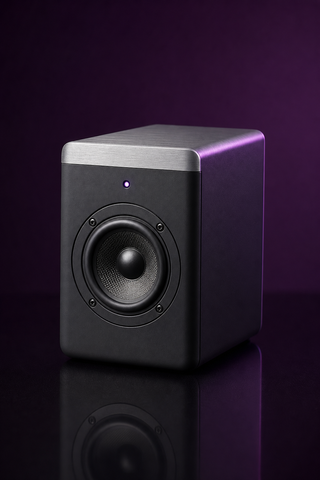
The first trade-off was the crossover point. The 3-inch driver’s off-axis response narrows above 2 kHz, so we settled at 2.4 kHz with a fourth-order slope to keep the tweeter’s workload low. The cost is a little midrange weight, recovered through cabinet tuning.
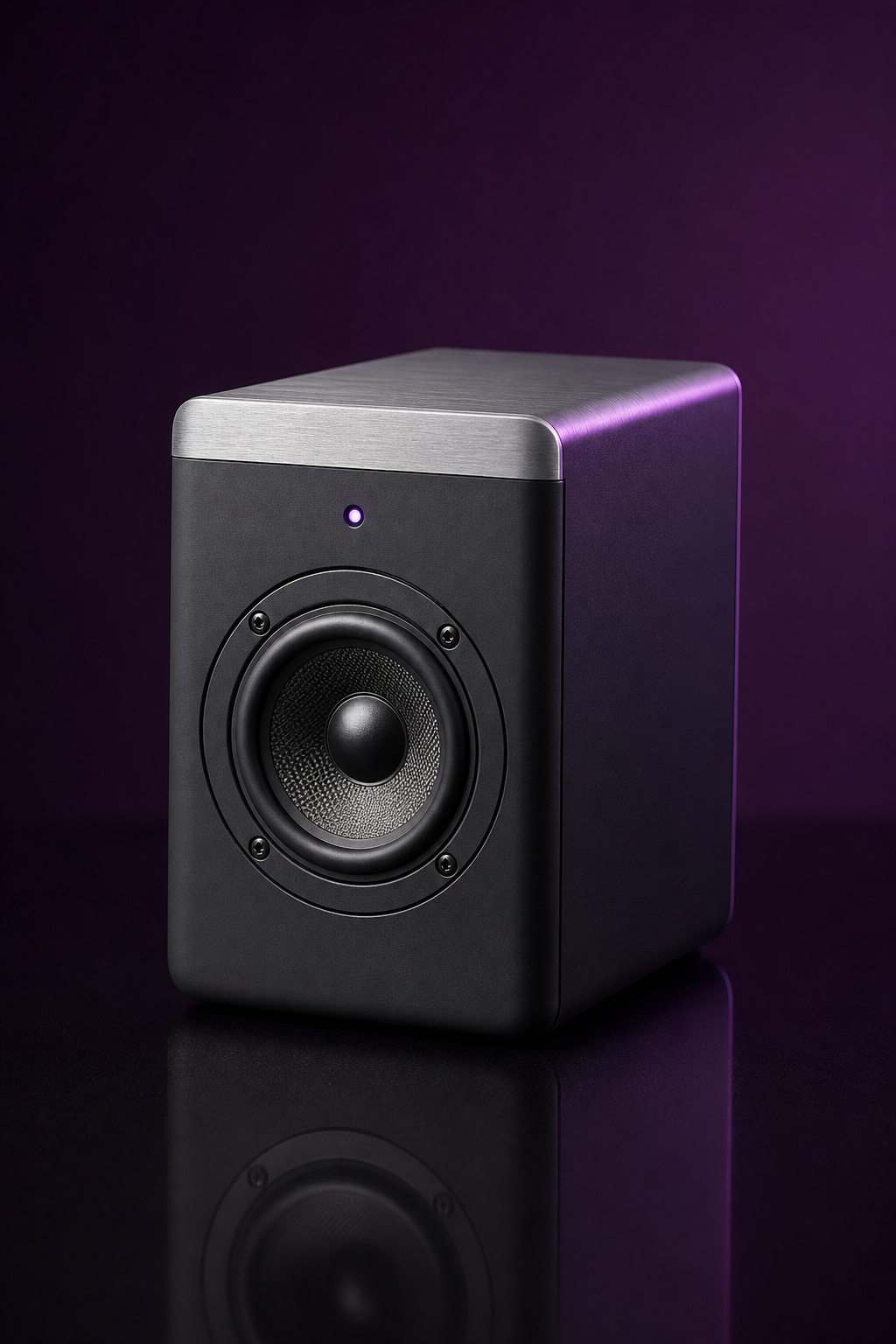
The second was baffle diffraction. The aluminium baffle carries a 12 mm radius, and the slightly recessed tweeter faceplate flattens the 3–5 kHz diffraction peak by roughly 1.5 dB. It is a small change on a measurement plot, but sibilance becomes noticeably cleaner.
The third was tweeter level. The engineering sample sat 1 dB above the final version, which sounded impressive for the first minute and tiring by the tenth. We brought it down so it stays stable across an hour, rather than making an impression in thirty seconds.
None of these choices is radical. By the end of tuning, most of the work was subtraction.
Melovia · Shanghai. Specifications refer to the final production version.